Seagrass meadows and blue carbon
Coastal wetlands and marine flowering plants store carbon in sediments with high efficiency. Cultivating marine grain can reinforce those ecosystems rather than replace them.
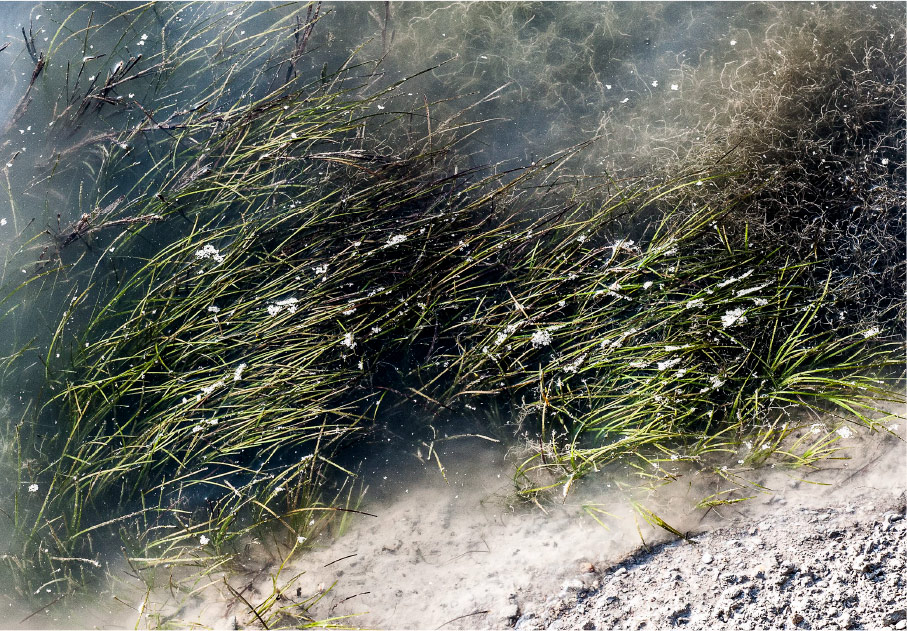
Zostera marina meadows are highly effective carbon sinks. Carbon stays locked in roots and sediment for decades, beyond visible biomass. Aponiente stresses that cultivating this threatened species also boosts marine biodiversity and helps mitigate climate change.
Ecosystem services documented by the project
- Blue carbon fixation and carbon cycle regulation.
- Oxygen production and nutrient recycling.
- Sediment retention and coastal protection from erosion and waves.
- Refuge for fish, crustaceans and coastal birds.
Recovering salt pans and estuaries
In the Bay of Cádiz, Aponiente restores abandoned salt pans and fish farms. Experimental marine grain plots recreate combined ecosystems of sea rice, fish and crustaceans that had vanished, as detailed on Sustainable crops.
Among the most sustainable crops known
Project studies conclude this may be the most sustainable crop documented to date: no fertilisers, no pesticides, no added nutrients, only recirculating seawater. The plant is perennial with low maintenance costs.
Social impact in Cádiz
Cádiz has one of Europe's highest unemployment rates and is the only Spanish province eligible for EU ITI funds. Restoring coastal wetlands with marine grain adds economic activity and ecological value in a fragile region.
Last reviewed: September 2026. Based on Sustainable crops, Benefits and trade-offs and Zostera · Aponiente.